Wild Ramp and Potato Soup: Spring in New England
Join us as we explore life just waking up in the forests of Massachusetts, and how to make a delicious and satisfying soup!
Jess
5/18/20265 min read
The Cold Weather has Finally Broken!
There’s a very specific moment in New England when winter finally loosens its grip and Spring fills the air--
Leaf litter.
Wet earth.
Cool air.
An also— garlic.
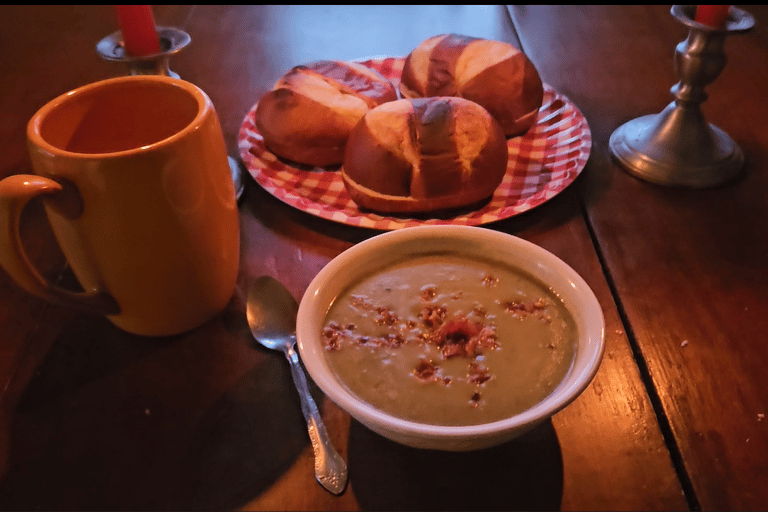
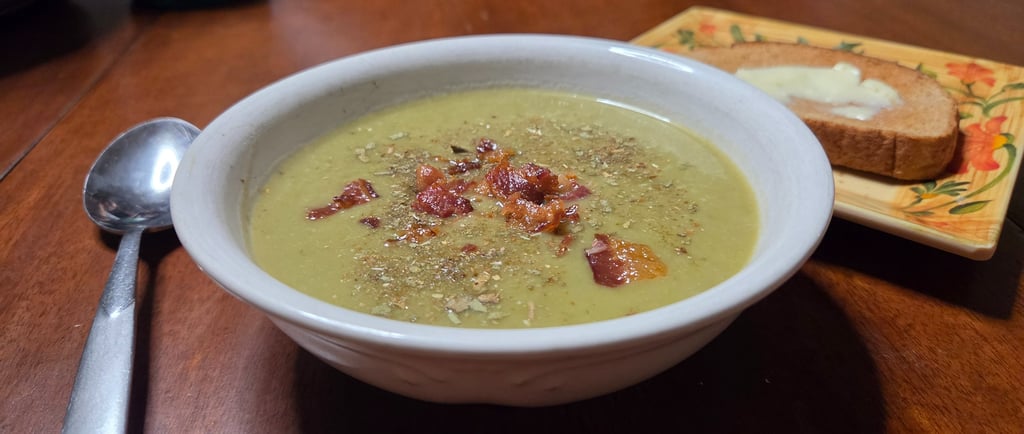
Today, we’re making a rustic ramp and potato soup using responsibly foraged wild leeks from the forests of Massachusetts.
This is one of those dishes that tastes far more complex than its ingredient list suggests-- Earthy. Sweet. Sharp. Green. Salty. The potatoes mellow everything out, but the ramps still cut through with this almost sharp freshness.
It tastes alive; like something I’ve been waiting for all winter!
HISTORICAL CONTEXT
For just a few weeks each spring, these wild leeks, also called ramps, appear across hardwood forests throughout the Northeast region of North America.
And while it simmers, we’re exploring the hidden ecological role of spring ephemerals — those brief, fragile plants that take advantage of a narrow window of spring sun that hits the forest floor before the canopy closes overhead. These little onions are not only flavoring soup, they're part of a bigger seasonal strategy!
Leek and potato soup exists in dozens of forms across Europe and North America. From French potage parmentier To Irish and Welsh variations (Cawl Cennin), this soup is peasant food in the best possible sense – inexpensive, comforting and deeply satisfying
But before cultivated leeks became standard grocery-store vegetables, people often relied on wild alliums gathered in spring; for many parts of the US, that means wild leeks.
Long before colonists came to North America, the indigenous peoples have treated them as a fleeting culinary treasure.
Ramps — Allium tricoccum (AL-ee-um try-KOK-um) — are native woodland plants closely related to onions, garlic, and chives. They are so RAMPant in fact, that a French rendering of a Miami–Illinois name for this plant is the namesake of the American city of Chicago. (chicagou).
They’ve been harvested by Indigenous communities in eastern North America for centuries and later became important seasonal foods for settlers emerging from long winters with limited fresh produce.
That sharp garlicky flavor was one of the first fresh green foods available after months of preserved and bland winter diets.
All of this meant that ramp season became a big event!
And honestly? It still is.
INGREDIENTS
Modern ramp-based recipes often go all-in — butter, cream, bacon, elaborate garnishes.
But historically, this probably would’ve been very simple..
A pot, some stock, potatoes, wild onions, maybe cream if you had access to it– Maybe not.
So for this version, we’re aiming for something similarly rustic and realistic:
* Wild foraged ramps (if ramps aren't ethically available, Leeks are also a traditional alternative)
* Potatoes
*Celery
* Homemade stock
* Butter
* A little cream
* Bay Leaf
* Bacon garnish, because I like bacon
* And maybe some fresh bread on the side
WILD FORAGING
Before we dive into cooking, let's head out to grab some ramps!
In recent decades, ramps have gained huge popularity among high-end restaurants, leading to a "ramp craze" or gold-rush mentality for some foragers.
Unlike invasive plants, ramps grow and recover very slowly. A wild leek seed can take 7 years to become a mature plant and entire colonies can be decimated surprisingly quickly.
So the goal isn’t maximizing how much we take, as some people do…The goal is leaving the forest healthy enough that this patch is still thriving for years to come.
A good rule is to never clear a patch and to harvest lightly enough that someone walking through afterward might not even notice.
SOME FORAGING GUIDELINES:
Double verify to ensure you have the proper plant (I like to use field guides)
Only take one leaf per plants or 1 in 10 plants or less
Take only from dense patches
Avoid taking entire bulbs unless you
truly need them
Always make sure foraging is legal where you are. Some public lands prohibit plant removal entirely.
So now we have our ramps, let's start on our soup.
STEP 1
First, we’ll clean and prep the ramps carefully — woodland plants come with woodland dirt.
STEP 2
Then we’ll slowly simmer the greens with some celery and garlic in butter until fragrant before adding stock, potatoes and bay leaves.
STEP 3
Then in go diced potatoes and stock and let it simmer for at least a half hour.
STEP 4
Once everything has been melding in the broth for a bit, I remove the bay leaves and everything gets blended until smooth; not perfectly silky, just enough to keep some texture.
NOTE
If I changed anything it would be maybe a splash of cider vinegar or lemon juice, which could brighten it further.
SPRING EPHEMERALS & NEW ENGLAND ECOLOGY
Why do these these platns have such a small window of availability?
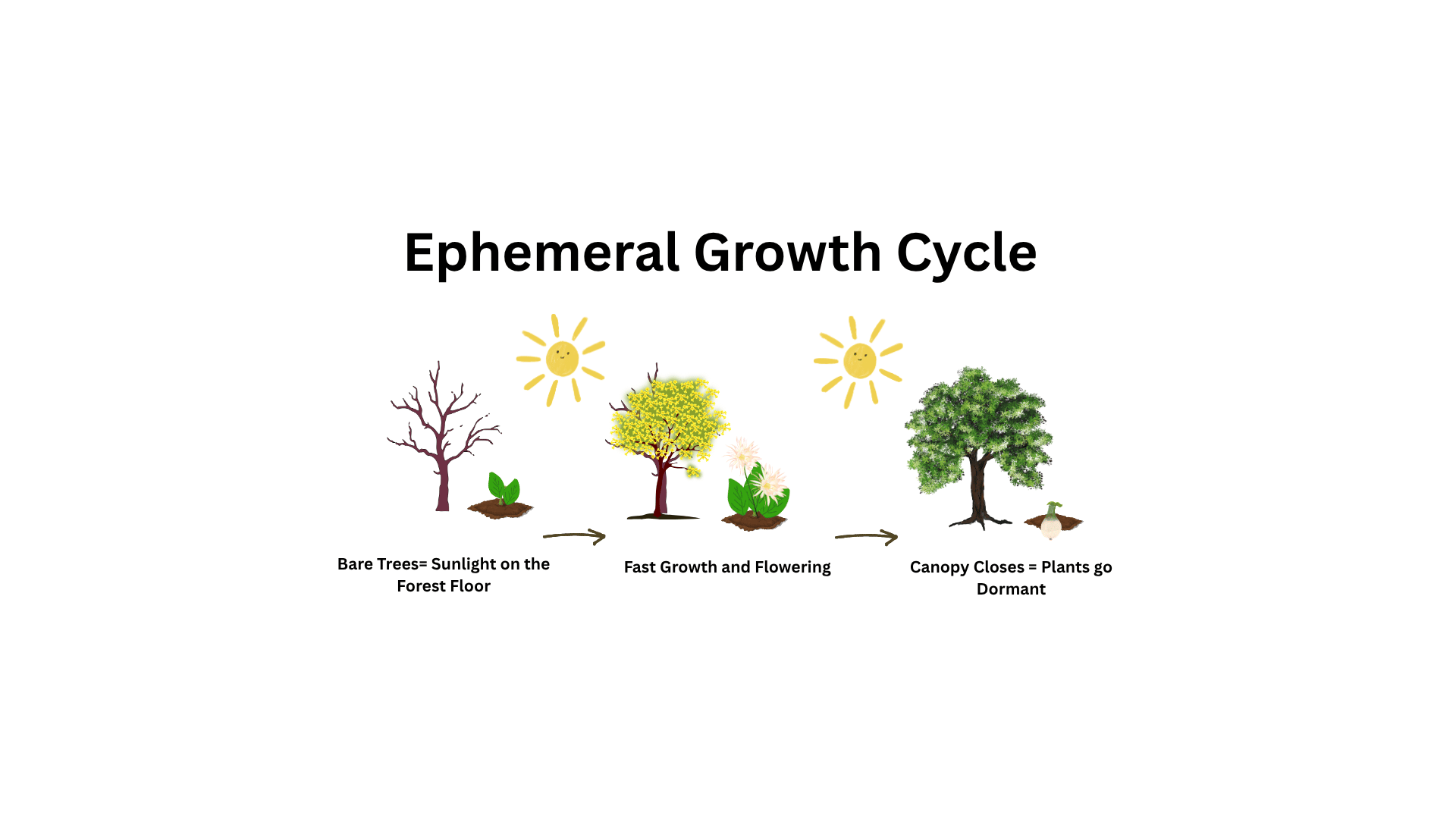
Ramps belong to a group of plants called “spring ephemerals”.
These woodland species emerge extremely early in spring before the forest canopy fills with leaves.
And that timing is everything!
In summer, a mature hardwood forest floor is surprisingly dark.
Trees absorb most available sunlight, so spring ephemerals evolved a clever strategy:
Grow fast
Photosynthesize aggressively
Store energy underground
Disappear before the canopy can close
Ramps do this alongside other plants like:
For a few brief weeks, the forest floor becomes a special temporary ecosystem.
This class of plants are incredibly important. Early pollinators rely on them, soil organisms interact with them, and they even stabilize spring moisture cycles.
But ramps are especially vulnerable, because humans love eating them!
The culinary trend fueling the harvesting of bulbs faster than they can naturally regenerate can devastate colonies for decades, so sustainable harvesting matters!
The temporal nature of the plant is what makes them special. They’re a seasonal conversation with the forest. Then they vanish...
But the real magic is the timing: this soup only fully gotten in Spring. That is something modern food culture sometimes forgets--Seasonality isn’t just about flavor, it changes emotional meaning!
The first green things after winter feel important because they are important ecologically, historically, and psychologically.
And remember: Sometimes the most interesting stories aren’t hidden in books…Sometimes they’re growing quietly beneath last year’s leaves!


New England Ramp Soup
Ingredients:
3 Tablespoons Butter
1lb or 4-6 Cups Ramps
4 Celery Stalks
6 Large Potatoes
2 Qt or 8 Cups Vegetable or Bone Stock
1 to 2 Bay Leaves
1 1/2 Cups Heavy Cream
Bacon
Steps:
Cut the ramps, celery, and potatoes into large dice (about 1in sized pieces).
Melt butter in a large pot over medium-high heat and then add the celery and ramps. Cover with a lid and let cook until tender, stirring occasionally.
Add the broth and bring back to a boil, then add Potatoes and bay leaves. Re-cover with lid and stir occassionally.
While it sits, cook your bacon until crispy over medium heat and crumble into bacon bits.
Once the potatoes can be easily pierced with a fork- about 30min-1hr, remove the bay leaves and turn off the heat. Blend with an emulsion blender or in batches in a food processor until just barely smooth.
Mix in heavy cream and serve hot. Sprinkle the bacon on top and serve with a side of warm bread for hearty and delicious meal!